From Suns set to Nautical Twilight - Sky Colors Evolution and Purple Light Formation
A spectacular astronomical event took place at sunset on 27 June.
In the sky, the sickle moon was in perfect alignment with the open cluster M44 (also known as the Crib), while a little further down, bathed in the orange light of twilight, Mercury shone close to the horizon.
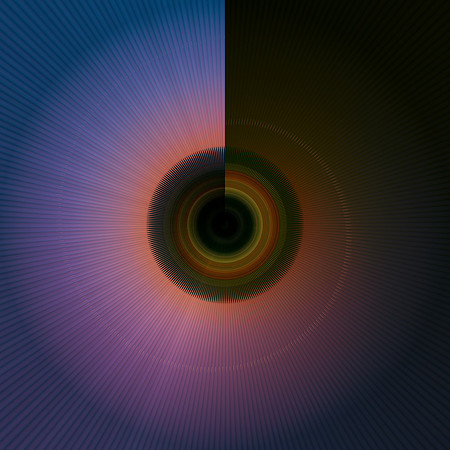
The setting of the Moon and the colour variation of the sky in the west from sunset to night was captured in this circular image where 250 shots were lined up consecutively while keeping the exposure constant. Sunset occurred at 20.30 local time and the first shot constituting the wheel was taken at 20.22 when the Sun was slightly further west and hidden by the Sicilian mountains known as the Madonie.
The last shot, on the other hand, was taken at 9.05pm shortly after the onset of nautical twilight. The predominant feature of this photograph is the formation of purple light in the sky between 15 and 20 minutes after sunset.
The phenomenon is described with great clarity by Marcel Minnaert in his famous book Light and Colour in the Outdoors, particularly from page 295 -298, where the author explains the chromatic evolution of the sky during sunset.
According to Minnaert, violet light reaches its maximum intensity when the Sun is between -4° and -5° below the horizon, i.e. between 15 and 35 minutes after sunset. This colour band lies between the blue of the highest sky and the warm tones of the horizon ranging from salmon-red to deep orange, as illustrated in the diagram on page 295 of the same volume.
Another interesting aspect is that the saturation of violet light tends to increase in the summer months, probably due to the more favourable atmospheric conditions.
The website https://atoptics.co.uk/blog/purple-light-reminder/ quotes: "This unique lighting phenomenon arises from the scattering of sunlight by particles in the lower atmosphere, such as dust, pollutants, and water droplets.
The shorter wavelengths of blue and violet light scatter more easily than longer wavelengths like red and ora
www.dariogiannobile.com 2014 - 2024